

Oil-Fired Hot Water Boilers: A Technical Guide for Plant Engineers
Hot water is a critical utility for process industries, commercial facilities and district heating systems, particularly in regions where reliable bulk hot water production is essential. Where a continuous supply of high-volume hot water is required, an oil-fired hot water boiler system is often the most practical solution. This guide from RKO Boiler covers the working principle, design features, components, types, maintenance and cost considerations that plant engineers need to evaluate when specifying or operating an oil-fired hot water boiler.
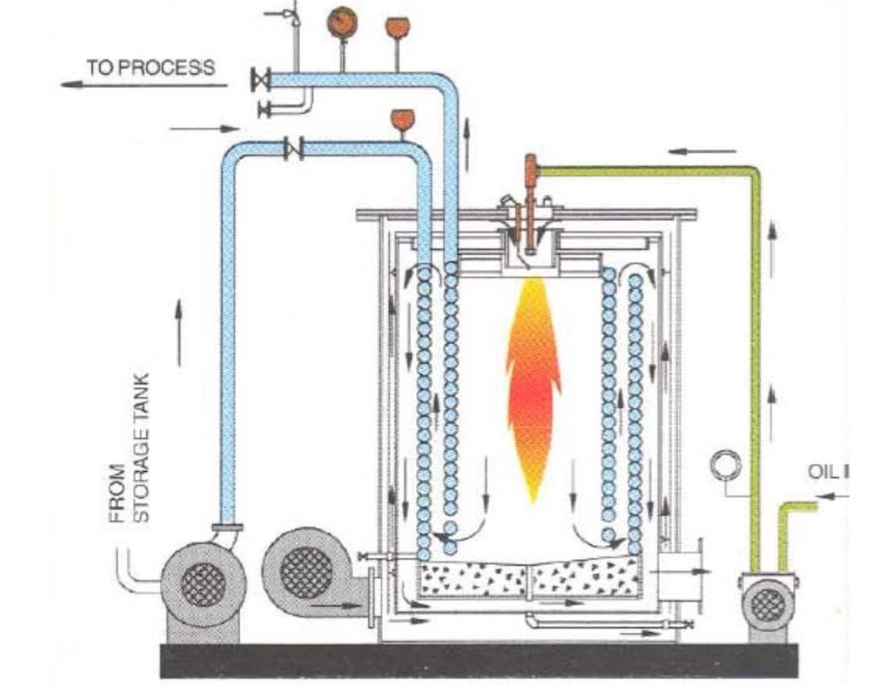
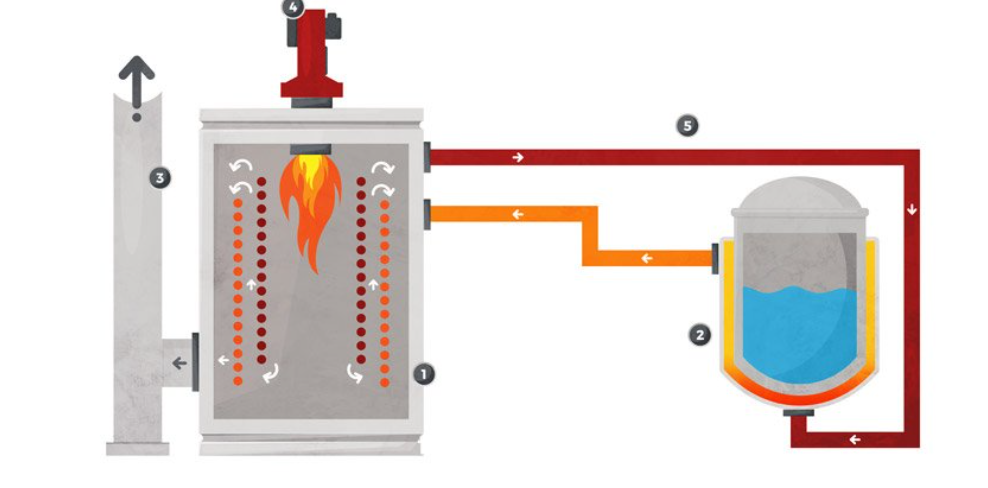
Oil-fired hot water boiler system drawing
What Is an Oil-Fired Hot Water Boiler System?
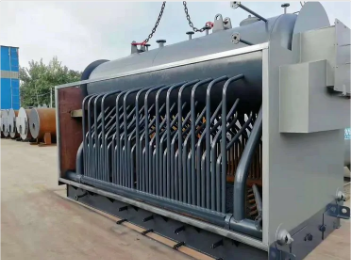
An industrial hot water boiler is a pressure vessel assembly enclosed in a metal shell. It uses the heat energy released by fuel combustion to raise the water temperature, and the heated water is then distributed through piping to industrial processes, heating networks or domestic hot water systems. In an oil-fired unit, the fuel is light oil, heavy oil, kerosene or red diesel, atomised and burned in a dedicated burner to produce a stable flame inside the combustion chamber.
Design of an Oil-Fired Hot Water Boiler
Unlike small commercial systems, industrial hot water boilers are designed not to boil water but to heat it to 220°F (beyond the standard boiling point of 212°F) by maintaining elevated internal pressure. This allows the boiler to deliver high-temperature hot water without phase change, which improves heat transfer efficiency and reduces the risk of steam-related problems in the distribution network.
Key Design Features:
- Compact and durable: Fabricated from anti-corrosive metals such as stainless steel to resist corrosion and extend service life.
- Lightweight insulation: Aluminum silicate fiber lining provides temperature and pressure resistance while keeping the unit relatively light and reducing heat losses.
- Shape options: Circular, vertical or horizontal configurations to suit available plant space and piping layout.
Components of an Oil-Fired Hot Water Boiler
Every oil-fired hot water boiler includes the following core parts:
- Burner: Combusts fuel (oil, gas or solid) to generate heat. On oil-fired units the burner atomises the fuel for clean, stable combustion.
- Heat Exchanger: Transfers heat from the combustion gases to the water.
- Combustion Chamber: The space where fuel burns continuously under controlled conditions.
- Control Systems: Automation tools for monitoring temperature, pressure and alarms, and for regulating burner operation.
Accessory Parts (Optional):
- Economizer
- Circulation pump
- Aquastat
- Feedwater heater
- Condenser
Types of Industrial Hot Water Boilers
1. Gas-Fired Boilers
- Fuels: Natural gas, LPG, propane or butane.
- Most efficient but costly, and dependent on a reliable gas supply.
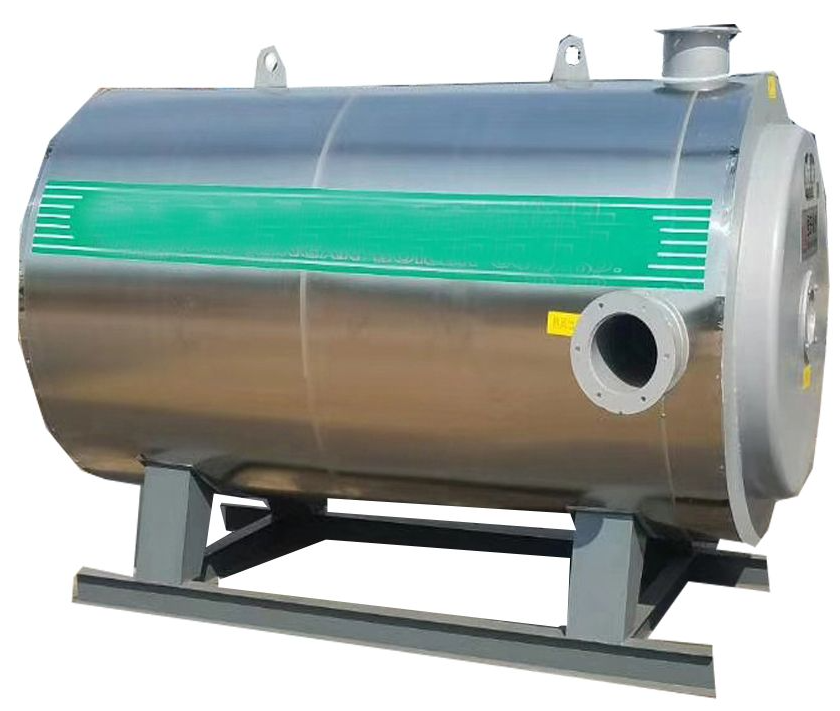
2. Oil-Fired Boilers
- Fuels: Light oil, heavy oil, kerosene, red diesel.
- Ideal where piped gas is unavailable, and well suited to plants with on-site fuel storage.
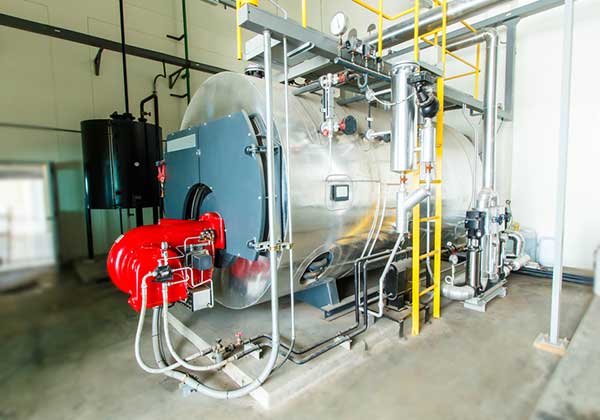
3. Solid-Fuel Boilers
- Fuels: Wood, coal, agricultural waste.
- Lower efficiency but cost-effective where solid fuel is readily available.
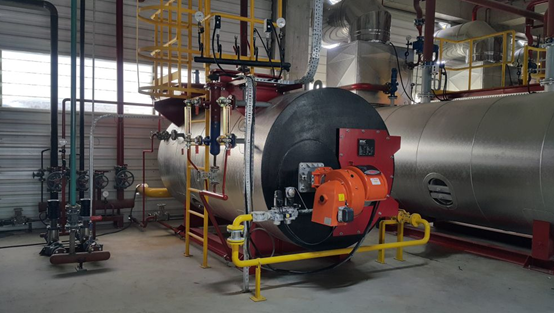
4. Electric Boilers
- 98% efficiency; requires a stable power supply and careful assessment of electricity tariffs.
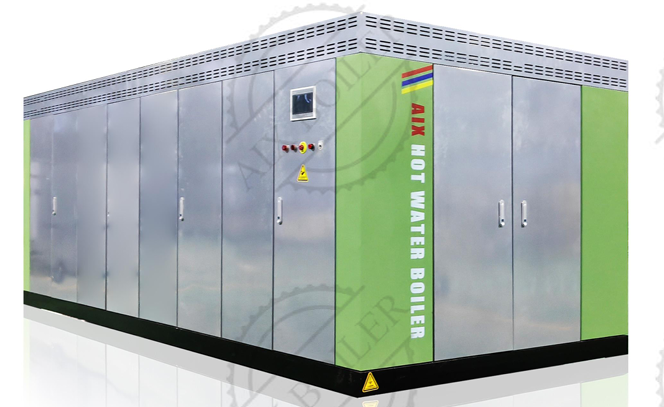
5. Vacuum Boilers
- Operates under negative pressure for safety.
- Energy-efficient and versatile for varying temperature needs.
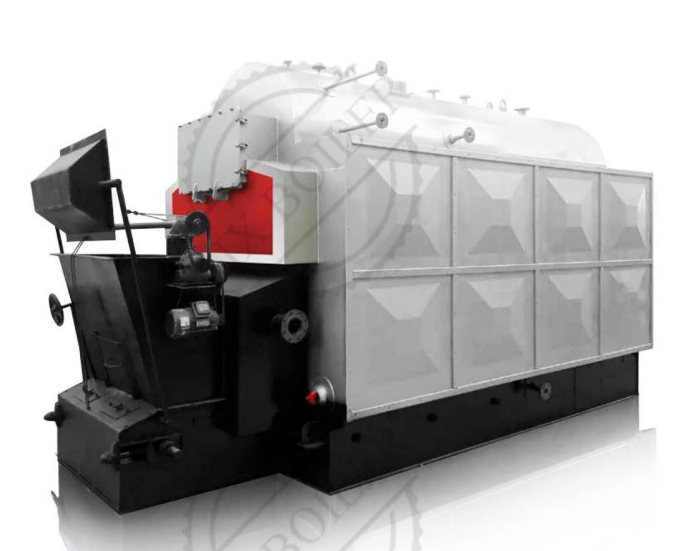
How Does an Oil-Fired Hot Water Boiler Work?
- Fuel Intake: Oil is fed into the combustion chamber through the burner.
- Combustion: Heat is generated and transferred via the heat exchanger.
- Water Heating: Water circulates through tubes, absorbing heat from the combustion gases.
- Distribution: Hot water is pumped to industrial systems, process loads or heating circuits.
Advantages of Oil-Fired Hot Water Boilers
- Safety: Stainless steel construction and pressure-resistant design.
- High Efficiency: Up to 98% with economizers or condensers.
- Automation: Smart controls for temperature regulation and leak detection.
Safety Precautions
- Wear protective gear when inspecting or servicing the boiler.
- Regularly check fuel and water levels and inspect for leaks.
- Never leave the boiler unattended during operation.
Maintenance Steps
- Inspect: Fuel lines, water supply and heat transfer surfaces.
- Revise: Arrange a professional check every 2 years.
- Clean: Remove residue and blockages to maintain efficiency and safe operation.
Cost Range
- Standard boilers: $9,000–$80,000 (capacity-dependent).
- 5-ton boilers: $55,000–$98,000.
Why Choose RKO Boiler?
With 40+ years of expertise, RKO Boiler provides:
- Durable, lightweight boilers with aluminum silicate insulation.
- Custom temperature control (10°C–90°C).
- Microcomputerized systems for precision.
Contact RKO Boiler today for a tailored solution for your plant.